
When to Apply Crabgrass Prevention in Michigan
Crabgrass is one of the most common lawn weeds in Michigan. Once it appears in summer, it spreads quickly and can take over thin areas of turf. The most effective way to stop crabgrass is by applying a pre-emergent crabgrass preventer in early spring, before the seeds begin to germinate.
For homeowners in Livonia, Northville, and Plymouth, proper timing is essential. Applying crabgrass prevention too late allows seeds to germinate, making the weed much harder to control later in the season.
What Is Crabgrass?
Crabgrass is a summer annual grassy weed that grows low to the ground and spreads outward in a crab-like pattern. It thrives in lawns that are:
- thin or stressed
- compacted from foot traffic
- weakened by drought or winter damage
- mowed too short during hot summer weather
Crabgrass also thrives in hot, dry, sunny conditions, especially when turf is cut too low. Short mowing heights expose soil to sunlight, creating ideal conditions for crabgrass seeds to germinate.
Once established, crabgrass produces thousands of seeds that remain in the soil and can germinate the following year.
When Crabgrass Germinates in Michigan
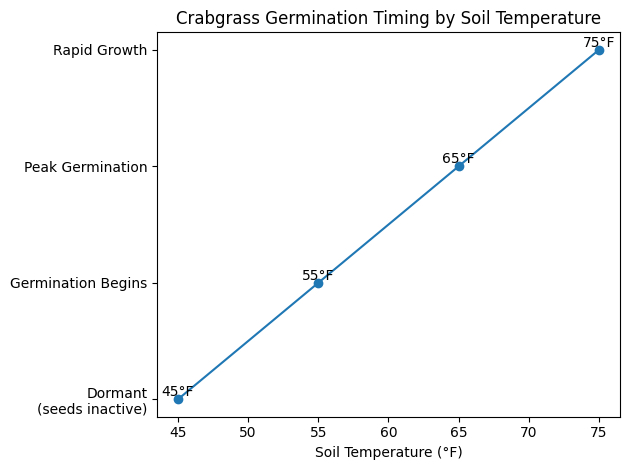
In Southeast Michigan, crabgrass typically begins to germinate when soil temperatures reach about 55°F for several consecutive days.
This usually occurs around mid-April, depending on spring weather conditions.
Because the exact timing varies each year, applying crabgrass prevention too late can allow seeds to germinate before the protective barrier is in place.
A properly timed pre-emergent treatment creates a barrier in the soil that stops crabgrass seedlings before they emerge.
The Best Time to Apply Crabgrass Preventer
The ideal time to apply crabgrass prevention in Michigan is early spring, before soil temperatures reach germination levels.
Many homeowners associate crabgrass prevention timing with the blooming of forsythia shrubs, which often signals soil temperatures are approaching the critical point for crabgrass germination.
Applying a professional pre-emergent treatment during this window helps prevent crabgrass from establishing throughout the growing season.
Mowing Height Plays a Big Role in Preventing Crabgrass
In addition to properly timed treatments, mowing height plays an important role in preventing crabgrass.
Crabgrass thrives in lawns that are cut too short, especially during hot and dry summer conditions. Short grass allows more sunlight to reach the soil surface, which encourages crabgrass seeds to germinate.
Maintaining a higher mowing height helps shade the soil and promotes thicker turf growth. A dense lawn naturally competes with weeds and makes crabgrass prevention treatments more effective.
For most Michigan lawns, mowing heights between 3 and 3.5 inches help promote healthier turf and reduce weed pressure.
What Happens If Crabgrass Prevention Is Applied Too Late?
If crabgrass seeds have already germinated, pre-emergent products will not stop the plants that have already emerged.
At that point, control becomes more difficult and may require:
- post-emergent weed control treatments
- additional lawn applications
- improving turf density through proper fertilization
- maintaining proper mowing height to encourage thicker turf
Preventative treatments are always the most effective way to keep crabgrass from taking over your lawn.
Professional Crabgrass Prevention for Michigan Lawns
At Growing Greener Lawns, crabgrass prevention is included as part of our professional lawn fertilization program.
Our treatments are designed specifically for lawns in Livonia, Northville, and Plymouth, taking into account Michigan soil conditions and seasonal timing.
Our lawn care program includes:
- early spring crabgrass prevention
- slow-release fertilization
- targeted weed control when needed
- treatments designed to promote thicker, healthier turf
A dense, properly maintained lawn — combined with the correct mowing height — is one of the best natural defenses against crabgrass and other weeds.
Serving Livonia, Northville & Plymouth
Growing Greener Lawns proudly provides lawn fertilization and weed control services throughout:
We also provide service in nearby communities including Canton and Novi.
Our programs are designed to help local lawns stay thick, green, and weed-free throughout the growing season.
Request a Free Lawn Estimate
If you’d like help preventing crabgrass and improving the health of your lawn, we would be happy to evaluate your property.
Our lawn care programs provide professional fertilization and weed control designed specifically for Michigan lawns.
Request a free lawn Estimate today to get started.
Frequently Asked Questions About Crabgrass Prevention
When should I apply crabgrass preventer in Michigan?
Crabgrass prevention should be applied in early spring before soil temperatures reach about 55°F. In Southeast Michigan, this typically occurs between late March and mid-April depending on weather conditions.
Is it ever too late to apply crabgrass preventer?
Yes. Once crabgrass seeds have germinated, pre-emergent products will no longer prevent those plants from growing. Early spring applications provide the best protection.
Does mowing height affect crabgrass growth?
Yes. Crabgrass thrives in lawns that are mowed too short. Maintaining a higher mowing height helps shade the soil and encourages thicker turf, which makes it more difficult for crabgrass to establish.
Should crabgrass preventer be applied before rain?
Light rainfall after application can help activate many pre-emergent products by moving the material into the soil. However, heavy rainfall immediately after application may reduce effectiveness if the product washes away.